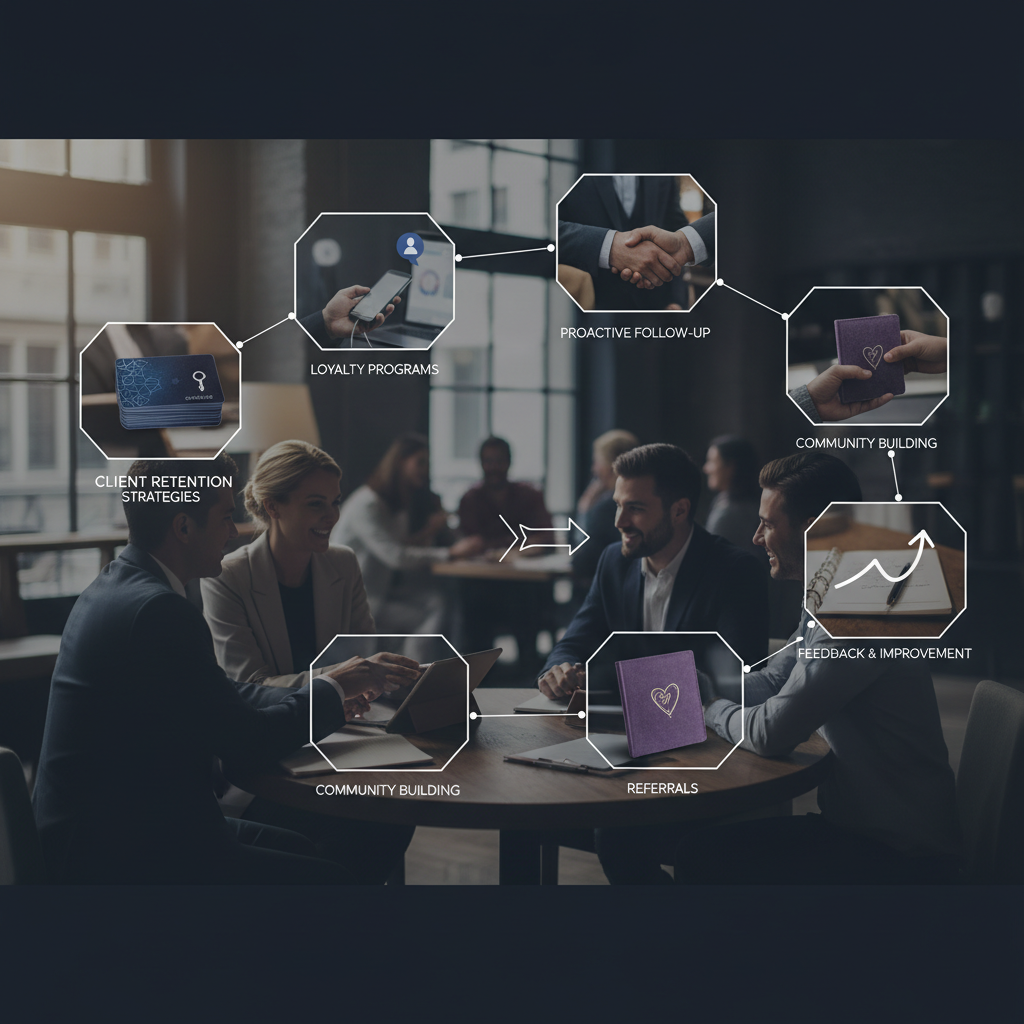
Acquiring a new client costs five to seven times more than keeping an existing one. Yet most service businesses pour their energy into marketing to strangers while underinvesting in the clients who already trust them. The math is simple: even a 5% increase in client retention can boost profits by 25% to 95%, according to research from Bain & Company. If you run a salon, spa, fitness studio, consulting firm, or any other service business, your growth engine isn't your ad budget — it's your retention rate.
This post breaks down seven proven client retention strategies that work in the real world. These aren't abstract frameworks — they're actionable, repeatable systems you can implement whether you're a solo operator or managing a team of ten.
Why Retention Beats Acquisition
Want to calculate the ROI of launching a loyalty program? Try our free loyalty ROI calculator — See the revenue impact in minutes — input your own numbers.
Before diving into tactics, it's worth anchoring the why. Loyal clients don't just buy more — they cost less to serve, buy more frequently, refer others, and forgive the occasional mistake. A client who has visited your business ten times is far more valuable than ten clients who visited once each.
The lifetime value of a retained client compounds. If your average client spends $80 per visit and comes in every six weeks, keeping that person for three years instead of one generates roughly $1,500 in additional revenue per client — from zero additional acquisition spend. Multiply that across your client base and retention becomes the highest-ROI activity in your business.
Referrals amplify this further. Happy long-term clients become unpaid salespeople. Word-of-mouth from a trusted friend converts at a dramatically higher rate than any paid channel, and the referred client comes in predisposed to loyalty.
Strategy 1: Loyalty and Rewards Programs
The most direct way to make returning feel earned is through a structured loyalty program. When clients know that each visit moves them closer to a reward, you give them a concrete reason to choose you over a competitor offering the same service.
Effective loyalty programs for service businesses share a few traits:
- Simplicity: Clients shouldn't need to do mental math to understand their progress. "Every 10th visit is free" is clearer than a tiered points system with redemption thresholds.
- Quick first reward: If the first reward requires 15 visits, most clients will disengage before reaching it. Consider offering a small incentive after the second or third visit to establish the habit.
- Digital tracking: Paper punch cards get lost and can be forged. Digital punch card apps keep the program frictionless and give you data on visit frequency and redemption rates.
- Flexibility: Rewards that go beyond discounts — think priority booking, complimentary add-ons, or exclusive experiences — preserve your margins while creating perceived value.
A loyalty card for small businesses doesn't have to be complicated. The goal is to make the loyal client feel recognized and rewarded. Even a simple stamp-based system, run consistently, outperforms no program at all.
Strategy 2: Proactive Follow-Up
Most service businesses wait for clients to come back on their own. The businesses that retain clients best don't wait — they reach out proactively with well-timed, relevant touchpoints.
Practical follow-up tactics:
- Post-service check-in: A brief text or email 24-48 hours after a service asking how the client is enjoying the results. This isn't a sales message — it's a genuine check-in that signals you care about outcomes, not just transactions.
- Rebooking prompts: If your service has a natural cadence (haircuts every 6 weeks, massages monthly, teeth cleanings twice a year), send a reminder at the appropriate interval. "It's been 6 weeks — ready to book your next appointment?" is simple and effective.
- Win-back campaigns: Clients who haven't returned in longer than their typical interval are at risk of churning. A "we miss you" message with a small incentive reactivates a percentage of lapsed clients at far lower cost than finding new ones.
- Milestone acknowledgments: A message on the anniversary of their first visit, or after their 10th appointment, reinforces the relationship and makes the client feel like more than a transaction.
The key is consistency. One follow-up won't move the needle. A systematic follow-up cadence, integrated into your workflow, creates multiple touchpoints that keep you top of mind.
Strategy 3: Personalization
Clients notice when you remember them — and they notice when you don't. Personalization is one of the most powerful retention tools available, and it doesn't require expensive software to execute at a basic level.
Start with what you already know:
- Service preferences: Does your regular client always request the same treatment? Note it in their profile and confirm it at check-in rather than asking from scratch every time.
- Allergies and sensitivities: In service businesses involving products or physical treatment, remembering these details isn't just good retention — it's essential safety.
- Life milestones: Birthdays, anniversaries, and major life events are opportunities to acknowledge the client as a person. A birthday message with a small reward makes a real impression.
- Conversation notes: Brief notes from previous visits ("mentioned new job," "celebrating daughter's graduation") give your team the context to personalize greetings without relying on memory alone.
As your business grows, customer retention software can automate much of this — triggering birthday messages, flagging lapsed clients, and surfacing preferences automatically. But even at a small scale, a well-maintained client profile in your booking software is a meaningful competitive advantage.
Strategy 4: Membership Models
Memberships convert one-time buyers into committed clients while creating predictable recurring revenue for your business. When done right, a membership doesn't feel like a lock-in — it feels like a smart deal that rewards commitment.
Membership structures that work well for service businesses:
- Monthly service packages: A fixed number of visits per month at a reduced per-visit rate. The client saves money; you gain predictable income and guaranteed visit frequency.
- Priority access: Members get first access to popular time slots, early booking windows, or exclusive appointment availability. This is a non-monetary perk that has high perceived value.
- Bundled perks: Combine the core service with add-ons, product discounts, or complimentary enhancements that are only available to members.
- Rollover policies: Allowing unused sessions to roll over for one month removes the anxiety of "wasting" a membership and increases signup conversion.
The nail salon loyalty program model is a good example of how even highly price-competitive service categories can build retention through membership tiers that go beyond discounting.
The goal is to make the membership feel like a relationship, not a contract. Clients who feel value in their membership refer others, upgrade over time, and rarely churn.
Strategy 5: Referral Programs
Your most loyal clients are your best marketing asset. A structured referral program channels that goodwill into new client acquisition — and because referred clients convert better and stay longer, the economics are excellent.
Effective referral programs for service businesses:
- Two-sided incentives: Reward both the referrer and the new client. The referrer gets credit for sharing; the new client gets a reason to try you. Both sides win.
- Make it easy to share: A referral link, a shareable code, or a simple "bring a friend" card removes friction. The harder it is to refer, the fewer referrals happen.
- Promote it at peak satisfaction moments: Right after a great appointment, when your client is delighted, is the ideal moment to mention your referral program. Satisfaction is high and the instinct to share is natural.
- Keep the reward meaningful: A $5 credit after five referrals won't motivate anyone. A meaningful reward — a free service, a significant credit, or a premium upgrade — signals that you value the referral.
Referral programs work best when they're embedded in your regular client communication, not treated as a one-time promotion. Make it a standing benefit of being a loyal client.
Strategy 6: Feedback Loops
Clients who feel heard stay. Clients who feel ignored — especially after a bad experience — leave and tell others. A structured feedback loop closes the gap between what you think your clients experience and what they actually experience.
Building an effective feedback loop:
- Ask after every visit: A brief post-service survey (one or two questions) captures sentiment while the experience is fresh. Net Promoter Score is a simple metric: "How likely are you to recommend us to a friend?" on a 1-10 scale tells you a lot.
- Respond to every negative review: Both privately and publicly. A client who sees you respond thoughtfully to criticism is more likely to trust you, not less.
- Act on patterns: If multiple clients flag the same friction point — wait times, booking difficulty, a specific staff member — that's a signal, not noise. Fix it.
- Tell clients what changed: When you make a change based on feedback, communicate it. "We heard you on booking wait times — we've added an online booking option." This closes the loop and demonstrates that feedback has consequences.
Feedback loops turn dissatisfied clients into retained ones. Most unhappy clients don't complain — they disappear. Giving them a structured channel to share concerns before they leave is one of the highest-leverage retention moves you can make.
Strategy 7: Community
The final strategy is the most durable: give clients a reason to belong, not just buy. Businesses that build genuine communities around their services create a form of loyalty that's nearly impossible for competitors to replicate.
Community-building tactics for service businesses:
- Exclusive events: Client appreciation nights, preview events, or workshops create shared experiences that deepen the client relationship beyond the core transaction.
- Private online spaces: A members-only Facebook group, Discord server, or app community gives loyal clients a place to connect with each other and with your brand.
- Behind-the-scenes access: Sharing your process, your team, your values, and your story turns clients into advocates who feel invested in your success.
- Cause alignment: If your business supports a cause, communicating that creates affinity with clients who share those values. It gives people a reason to choose you beyond price and convenience.
Community works because it shifts the client relationship from transactional to relational. A client who feels like they belong to something doesn't just come back — they bring others with them.
How Loop.fans Supports Multiple Strategies in One Platform
Implementing seven separate retention strategies across seven separate tools is unwieldy for most small service businesses. Loop.fans consolidates the most impactful tactics — loyalty rewards, digital punch cards, referral incentives, and client engagement — into a single platform that's designed for businesses without dedicated marketing teams.
You can launch a loyalty program in minutes, customize rewards that reflect your brand, and start collecting the data you need to personalize follow-ups and identify at-risk clients. The platform handles the tracking so you can focus on delivering the service quality that makes retention possible in the first place.
Ready to get started?
Start your free trial on Loop.fans — Free loyalty tools for businesses of every size.
Related Guides
- Small Business Loyalty Program: Complete Setup Guide
- Loyalty Program ROI: How to Calculate Whether Your Program Is Worth It
- Building Festival Loyalty Programs That Sell Out Events
- Gym Loyalty Program
- Destination Loyalty Programs: How to Drive Repeat Visitation
- How to Create a Massage Membership Program for an Independent Studio
- Cross-Business Loyalty Coalitions for Tourism: How Destinations Work Together
- Best Loyalty Apps for Restaurants: Honest Comparison for Independent Operators
- What Is a Loyalty Card? How They Work and Why Businesses Use Them
- Spa Loyalty Program
- Best Scheduling Software for Massage Therapists
- SMS Marketing for Small Business: How to Use Text Messages to Drive More Sales
- Post-Festival Community: Turning Attendees Into Year-Round Tribe
- Digital Loyalty Cards for Nail Salons: Do They Work?
- Customer Feedback Loop: How to Collect, Act On, and Close the Loop With Customers
- White Label Loyalty Program: What It Is and When Your Business Actually Needs One
- Best Nail Salon Booking Apps for Small Salons
- Loyalty Program for Service Businesses: How to Keep Clients Booking
- Massage Therapist Marketing Ideas to Get More Repeat Clients
- Launch Events That Build Lasting Brand Communities